Chapter 11 Required Materials and Tasks
Due July 24: Required Readings–Teaching Philosophies
- Haugen, Lee. (Accessed 2022). Writing a teaching philosophy statement. Iowa State University Center for Excellence in Learning and Teaching.
- Fulkerson, Richard. (2005). Composition at the turn of the Twenty-First Century. College Composition and Communication, 56, 654-687.
- Cotton, Kathleen. Teaching composition: Research on effective practices.
- Duffelmeyer, Barb Blakely. Not Just Showing Up to Class: New TAs, Critical Composition Pedagogy, and Multiliteracies
- Tinto, Vincent. (Sep. 26, 2016). From retention to persistence. Inside Higher Ed.
Chapter 11 Class Activities
Part 1: Theme for English B (10 minutes)
- Hughes, Langston. (1951). Theme for for English B.
- Poem written in 1948 and published in 1951
- Hughes uses the idea of an English writing assignment to explore the topic of freedom
-
The instructor said,Go home and write
a page tonight.
And let that page come out of you—
Then, it will be true.I wonder if it’s that simple? 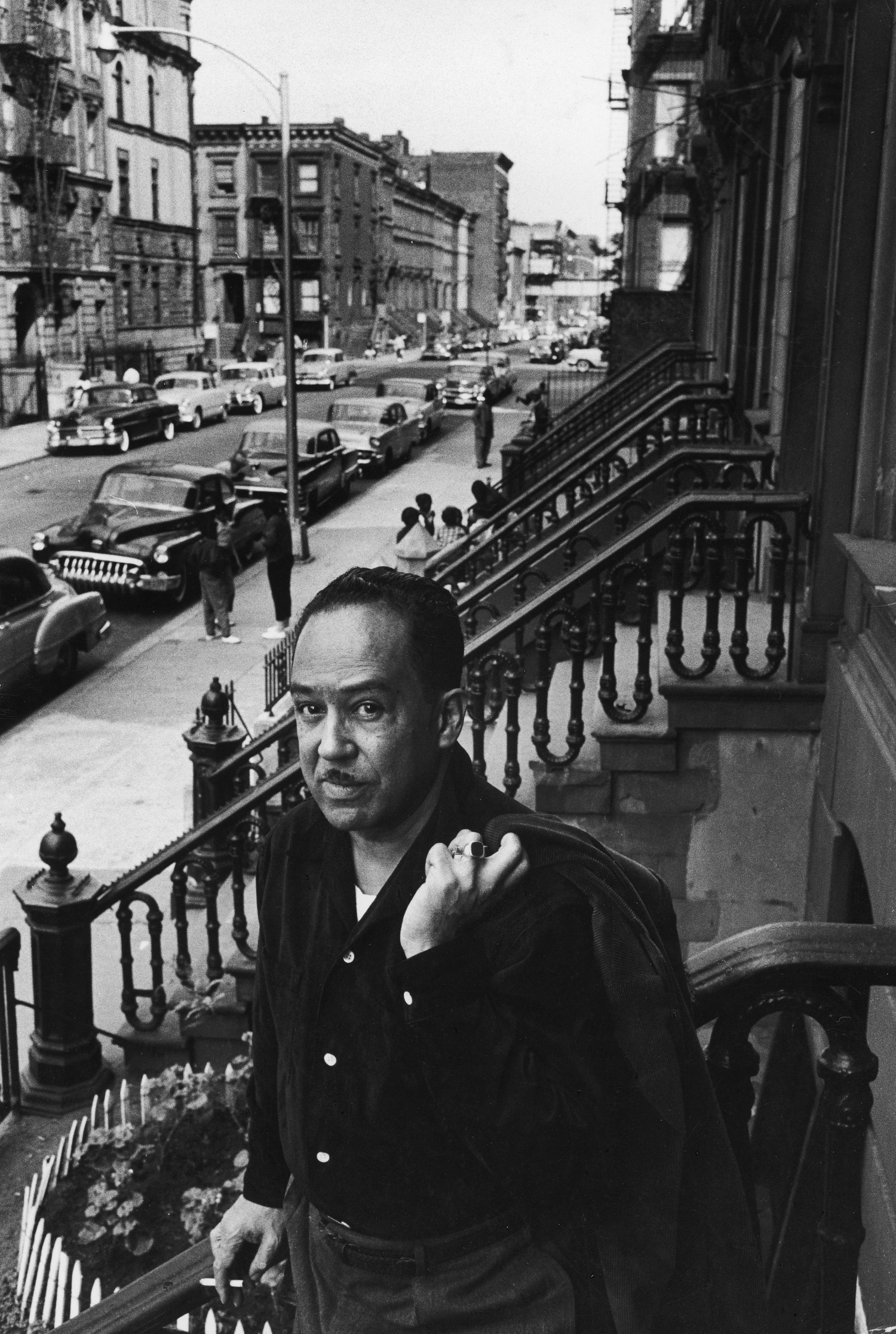
- Video Poem: Morgan, Jaime, & Shorter, Wayne. (2008, May 22). Langston Hughes’ theme for English B.
- Excellent version of the poem set to the song “Footprints” from legendary jazz artist Miles Davis
- Other Video Versions of the Poem
- Video Poem: Gemini, Young. (2019, Jan. 2). Theme for English B.
- Directed by Caleb Neal
- An excellent performance of the poem which captures it spirit nicely
- Video Poem: Jermaine. (Sep. 27, 2015). Theme for English B by Langston Hughes
- Featuring photographs of Hughes
- Video Poem: Albers, Bethany (2017, Apr. 3). Theme for English B digital poem.
- Highlights the words of the poem on key graphics and set to music
- Video Poem: Murrieta, Erica Gomez. (2019). Theme for English B by Langston Hughes.
- Made by 3 high school students
- Video Poem: Manjo, Baby. (2020, Mar. 30). Theme for English B
- Set to guitar music
- Video Poem: Gemini, Young. (2019, Jan. 2). Theme for English B.
Part 2. Journal Writing: A Little Pedagogical Poetry (15 minutes)
A good teacher is…
make a list
of teaching words
on page from you
and try to make the words
come out true.
Part 3. Small Group Discussion (20 minutes)
- Take the words and ideas each person came up with
- Combine them into a group poem about teaching
- You will probably need to add a few extra lines to make it all come out right
Part 4. Full Class Discussion (15 minutes)
- Talk about the Pedagogy Poems
Part 5. Journal Writing: Pedagogical Beliefs (15 minutes)
Let’s start our exploration of pedagogical beliefs by having you write answers to the following questions:
- Why am I teacher?
- Why does teaching matter to me?
- What are my central goals as a teacher?
- How can I help students find their own voices in my classroom (one of the points raised by Hughes)?
Part 6. Small Group Discussion (15 minutes)
- Discuss people’s thoughts about teaching
Part 7. Full Class Discussion (15 minutes)
- Discussion of why teaching matters
Part 8. Break (10 minutes)
- We will take a short break to re-energize everyone
Part 9. Overview of Composition Pedagogies (10 minutes)
- The Principles of Process Theory
- Donald Murray (1972) outlined the following implications which emerge from Process Theory:
- The text of the course is the student’s own writing.
- The student finds his [or her] own subject.
- The student uses [her or] his own language.
- The student may write as many drafts as necessary.
- The student may write in any form.
- Mechanics come last.
- The writer needs both unpressured time and a deadline.
- A grade finishes a paper the way publication does.
- Each student write must explore the writing process individually.
- “There are no rules…All writing is experimental” (p. 5).
- Donald Murray (1972) outlined the following implications which emerge from Process Theory:
- The Principles of Post-Process Theory
- Thomas Kent (1999) explains that there are three primary assumptions about the act of writing agreed upon by Post-Process Theorists:
- Writing is public
- Writing is interpretive
- Writing is situated
- Thomas Kent (1999) explains that there are three primary assumptions about the act of writing agreed upon by Post-Process Theorists:
- Social Justice Pedagogy
- The five key principles of Social Justice Pedagogy:
- Equity
- Access
- Diversity
- Participation
- Human Rights
- Chapman, Thandeka K., Hobbel, Nikola, & Alvarado, Nora V. (2011). A Social Justice Approach as a Base for Teaching Writing. Journal of Adolescent & Adult Literacy, 54(7), 539–541.
- McCoy, Shane A. (Winter 2020). Writing for justice in First-Year Composition (FYC). Radical Teacher, 116, 26-36.
- The five key principles of Social Justice Pedagogy:
- COMIC Book Pedagogy
- This is a new pedagogy that Dr. Pagnucci has been developing in collaboration with a number of IUP doctoral students and IUP alumni
- If you have an interest in using popular culture in the classroom, then Comic Book Pedagogy is for you!
- The key principles of COMIC Book Pedagogy are:
- C is for Cool where we use comic books and other pop culture materials to get students excited about learning
- O is for Our Selves and Others where we focus on our Holistic Well-Being
- M is for Multimodal Composing where we help students to use technology to compose in a broad range of forms
- I is for Inclusion where we help students to learn to value diversity and to empathize with others
- C is for Collaborative Learning where we help students to learn and write together
- Major Composition Pedagogies
Part 10. Small Group Discussion: Pedagogical Principles (15 minutes)
- Now that we’ve talked over some key ideas, let’s see if you can, as a group, define your own set of core Pedagogical Principles
- Keep the number small
- You’re trying to decide what things are the most important to focus upon
Part 11. Full Class Discussion: Pedagogical Principles (15 minutes)
- What key teaching principles did your group decide upon?
Part 12. Final Thoughts (10 minutes)
Assignments
- Due July 25: DRAFT of Your Teaching Pedagogy Statement
- Your final task for ENGL 830 is to write a Teaching Pedagogy Statement
- Hopefully this statement will capture many facets of your thinking from this course about how to best teach college composition
- We will take some time in class to workshop your Teaching Pedagogy Statement
- DUE July 26: Course Requirement–Teaching Pedagogy Statement
- Due July 25: DRAFT of Your Teacher Website
- We will spend the first half of the class working on your website to further enhance it
- You want to include some information about yourself, perhaps some pictures, and some information about your home and/or university
- You are working to get your English 830 documents included on the websites
- If you have time, you might create a page to highlight some of your research interests
- We will spend the last half of the class having each person take 5 or 10 minutes to INFORMALLY show their website
- DUE July 26: Course Requirement–Teacher Website
- DUE July 26: Course Requirement–Course Rationale
- Due July 26: Special Personal Object
- If possible, please bring to class a small object that is significant to you
- If you can’t physically get the object, then, again if possible, get a photograph of the object
- Also, if possible, get a picture of the room in which you normally keep this object
For Those Who Need a Little More Time! 🙂
- FINAL DUE DATE: July 31
- Feeling like you need more time? You may grant yourself an extension if you need it.
- Simply send Dr. Pagnucci an email saying what you are still working on for the Final Due Date