Chapter 9 Required Tasks
- Due July 22 Monday: Course Requirement–DEIB Statement
- Due July 22 Monday: DRAFT of Your Teacher Website
- We will spend the first half of the class working on your website to further enhance it
- You want to include some information about yourself, perhaps some pictures, and some information about your home and/or university
- You are working to get your English 830 documents included on the websites
- If you have time, you might create a page to highlight some of your research interests
- We will spend the last half of the class having each person take 5 or 10 minutes to INFORMALLY show their website
Chapter 12 Class Activities
Part 1: Theme for English B (15 minutes)
- Hughes, Langston. (1951). Theme for for English B.
- Poem written in 1948 and published in 1951
- Hughes uses the idea of an English writing assignment to explore the topic of freedom
-
The instructor said,Go home and write
a page tonight.
And let that page come out of you—
Then, it will be true.I wonder if it’s that simple? 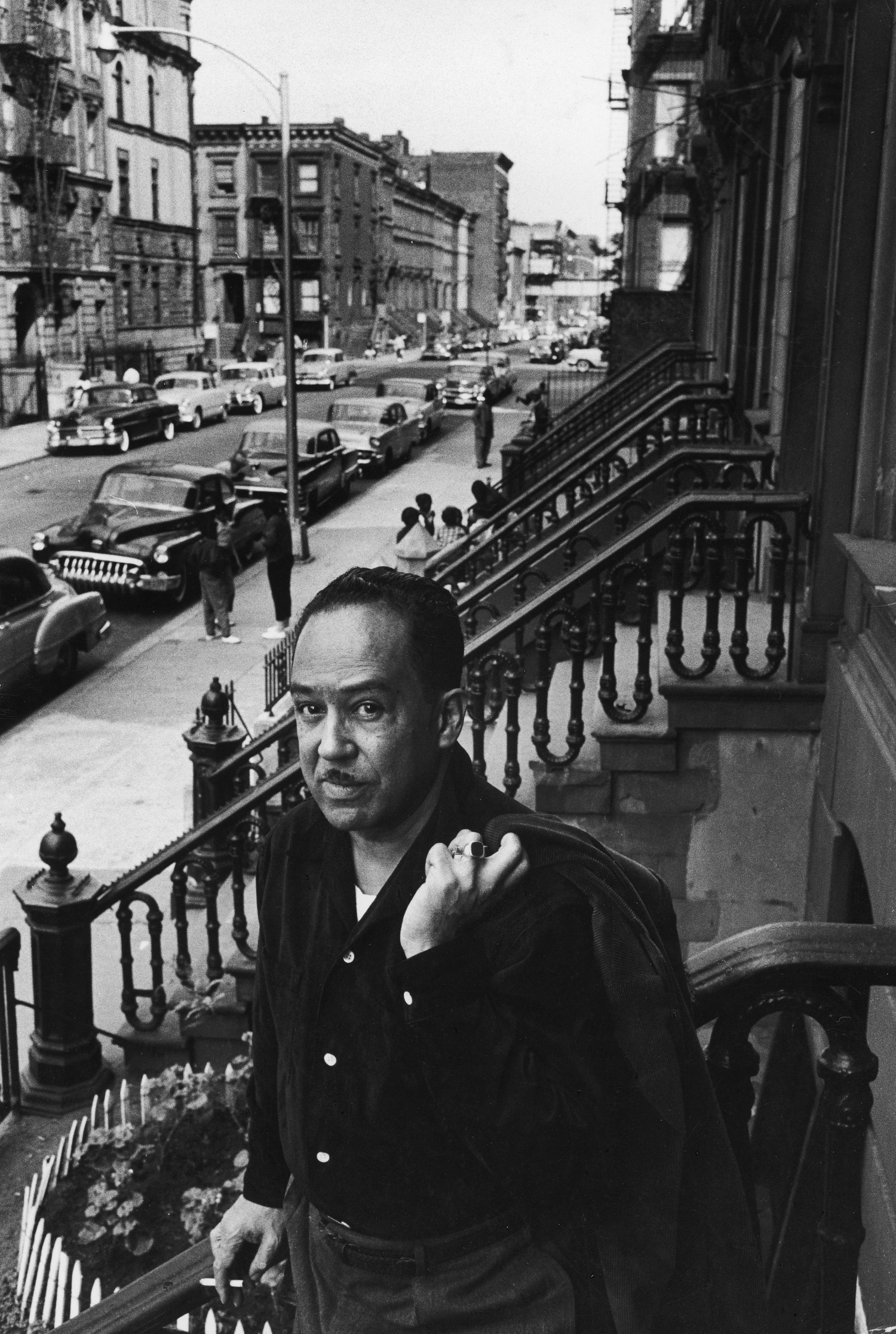
- Video Poem: Morgan, Jaime, & Shorter, Wayne. (2008, May 22). Langston Hughes’ theme for English B.
- Excellent version of the poem set to the song “Footprints” from legendary jazz artist Miles Davis
- Other Video Versions of the Poem
- Video Poem: Gemini, Young. (2019, Jan. 2). Theme for English B.
- Directed by Caleb Neal
- An excellent performance of the poem which captures it spirit nicely
- Video Poem: Jermaine. (Sep. 27, 2015). Theme for English B by Langston Hughes
- Featuring photographs of Hughes
- Video Poem: Albers, Bethany (2017, Apr. 3). Theme for English B digital poem.
- Highlights the words of the poem on key graphics and set to music
- Video Poem: Murrieta, Erica Gomez. (2019). Theme for English B by Langston Hughes.
- Made by 3 high school students
- Video Poem: Manjo, Baby. (2020, Mar. 30). Theme for English B
- Set to guitar music
- Video Poem: Gemini, Young. (2019, Jan. 2). Theme for English B.
Part 2. DEIB Peer Review (20 minutes)
- Swap DEIB statements
- Offer feedback
- Then discuss general DEIB issues that emerge from the statements
Part 3. DEIB Peer Review (20 minutes)
- Swap DEIB statements
Part 4. Sample DEIB Statements
- Many departments now have a DEIB statement that helps explain part of their basic institutional values. Here are some good ones:
- Dr. Pagnucci’s Diversity, Equity, Inclusion, and Belonging (DEIB) Statement (2024)–A more welcoming statement
- Dr. Pagnucci’s Diversity, Equity, and Inclusion (DEI) Statement (2023)–An aggressive early statement
- I want to stress that your statement does not have to match my statement, but I offer mine as one more example
- No DEIB Statement is perfect
- It’s important to acknowledge that although institutions often adopt such statements, they do not solve all, or sometimes any, social justice problems
- Nevertheless, at their best such statements do encourage people to consider what they value and to try to rethink their practices for the better
- In addition, while some people may disregard the statements other people may be glad to hear those statements made
- Such statements have become part of the academic terrain, so they carry weight broadly as an established institutional practice
Part 5. Full Class Discussion of DEIB Issues (15 minutes)
- As a class we will talk over the DEIB statements
Part 6. Dr. Pagnucci’s DEIB Statement (5 minutes)
Part 7. Journal Writing: A Little Pedagogical Poetry (15 minutes)
What is the language of good teaching?
Make a list
of teaching words,
like pedagogy
or scholar
or guide on the side
or happy and curious but frazzled
and overworked
and underpaid.
What is the look of good teaching?
Describe
how you teachers look
in action,
in class,
in their minds
and at the start of week
or by Friday.
What is the sound of good teaching?
Describe how teachers talk
to motivate students
to do their best
and to help everyone
learn. Tell what teachers say
to save the day.
Part 8. Writing a Group Teacher Poem (15 minutes)
The instructor said
Go home and write
(well maybe you better stay in the classroom)
a page today,
a teacher poem,
if you will.
And let that page come out of you
and your group
as a group
on a page from all of you–
Then, it will be true.
It’s simple, he said,
but they wondered if that was really true.
Part 9. Teacher Poem Sharing (15 minutes)
- Talk about the Teaching Poems
Part 10. Teacher Poem Archiving (15 minutes)
- Please type and send your Teacher Poem to Dr. Pagnucci
- Please include everyone’s name on the poem
- Dr. Pagnucci will create an archiver of the poems for the future
Part 11. Break (10 minutes)
- We will take a short break to re-energize everyone
Part 12. Overview of Composition Pedagogies (10 minutes)
- The Principles of Process Theory
- Donald Murray (1972) outlined the following implications which emerge from Process Theory:
- The text of the course is the student’s own writing.
- The student finds his [or her] own subject.
- The student uses [her or] his own language.
- The student may write as many drafts as necessary.
- The student may write in any form.
- Mechanics come last.
- The writer needs both unpressured time and a deadline.
- A grade finishes a paper the way publication does.
- Each student write must explore the writing process individually.
- “There are no rules…All writing is experimental” (p. 5).
- Donald Murray (1972) outlined the following implications which emerge from Process Theory:
- The Principles of Post-Process Theory
- Thomas Kent (1999) explains that there are three primary assumptions about the act of writing agreed upon by Post-Process Theorists:
- Writing is public
- Writing is interpretive
- Writing is situated
- Thomas Kent (1999) explains that there are three primary assumptions about the act of writing agreed upon by Post-Process Theorists:
- Social Justice Pedagogy
- The five key principles of Social Justice Pedagogy:
- Equity
- Access
- Diversity
- Participation
- Human Rights
- Chapman, Thandeka K., Hobbel, Nikola, & Alvarado, Nora V. (2011). A Social Justice Approach as a Base for Teaching Writing. Journal of Adolescent & Adult Literacy, 54(7), 539–541.
- McCoy, Shane A. (Winter 2020). Writing for justice in First-Year Composition (FYC). Radical Teacher, 116, 26-36.
- The five key principles of Social Justice Pedagogy:
- COMIC Book Pedagogy
- This is a new pedagogy that Dr. Pagnucci has been developing in collaboration with a number of IUP doctoral students and IUP alumni
- If you have an interest in using popular culture in the classroom, then Comic Book Pedagogy is for you!
- The key principles of COMIC Book Pedagogy are:
- C is for Cool where we use comic books and other pop culture materials to get students excited about learning
- O is for Our Selves and Others where we focus on our Holistic Well-Being
- M is for Multimodal Composing where we help students to use technology to compose in a broad range of forms
- I is for Inclusion where we help students to learn to value diversity and to empathize with others
- C is for Collaborative Learning where we help students to learn and write together
- Major Composition Pedagogies
Part 13. Journal Writing: Pedagogical Beliefs (15 minutes)
Let’s start our exploration of pedagogical beliefs by having you write answers to the following questions:
- Why am I teacher?
- Why does teaching matter to me?
- What are my central goals as a teacher?
- How can I help students find their own voices in my classroom (one of the points raised by Hughes)?
Part 14. Small Group Discussion: Pedagogical Principles (15 minutes)
- Discuss people’s thoughts about teaching
- Then let’s see if you can, as a group, define your own set of core Pedagogical Principles
- Keep the number small
- You’re trying to decide what things are the most important to focus upon
Part 15. Full Class Discussion: Pedagogical Principles (15 minutes)
- Discussion of why teaching matters
- Discussion of key teaching principles your group decided upon?
Part 16. Final Thoughts (10 minutes)
Assignments
- July 23 Tuesday: Conferences
- DUE July 23 Tuesday: Course Requirement–Course Rationale
- DUE July 24 Wednesday: Course Requirement–Teacher Website
- Due July 24: Special Personal Object
- If possible, please bring to class a small object that is significant to you
- If you can’t physically get the object, then, if possible, get a photograph of the object (otherwise you will have to use your memory)
- Also, if possible, get a picture of the room in which you normally keep this object
For Those Who Need a Little More Time! 🙂
- FINAL DUE DATE: July 29
- Feeling like you need more time? You may grant yourself an extension if you need it.
- Simply send Dr. Pagnucci an email saying what you are still working on for the Final Due Date