The World Needs Saving

Chapter 15 Required Materials and Tasks
- Stanley Fish (January 23, 2003). Save the world on your own time. The Chronicle of Higher Education.
- Bizzell, Patricia. (2009). Opinion: Composition Studies Saves the World! College English 72(2).
- Williams, Deborah. How First-Year Comp Can Save the World. Inside Higher Ed, 2 Jan. 2020, https://www.insidehighered.com/views/2020/01/02/benefits-applying-best-aspects-composition-classes-higher-education-general-opinion. Accessed 4 July 2020.
- Five Essential Components for Social Justice Education Heather W. Hackman
- McCoy, Shane A. (Winter 2020). Writing for Justice in First-Year Composition (FYC). Radical Teacher, 116, 26-36.
Chapter 15 Class Activities
Freewriting: Saving the World
Spend a few minutes freewriting about these questions:
- What is your thought about the current state of the world?
- Do we have a responsibility to make the world a better place?
- How can we use our teaching to do that?
- As teachers, what, if anything, should we do about social injustice?
Composition and Social Justice Theory
- The Quest for Truth, Social Justice, and the Academic Way
- Critical Pedagogy
- Paolo Freire

- “The more students work at storing the deposits entrusted to them, the less they develop the critical consciousness which would result from their intervention in the world as transformers of that world. The more completely they accept the passive role imposed on them, the more they tend simply to adapt to the world as it is and to the fragmented view of reality deposited in them.”
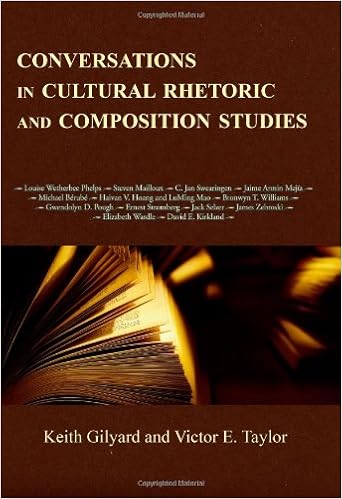
- Cultural Studies/Cultural Rhetoric
- Keith Gilyard and Victor E. Taylor
- Teaching Writing and Social Justice
- Mya Poe, Asao B. Inoue, and Norbert Elliot

Discussion Questions
- What is Fish’s position vs. Bizzell’s?
- Should our teaching be value-neutral or do we have a moral responsibility to use our teaching to make the world better?
- Should we teach the value-neutral tool of academic discourse or social justice?
- Can you remove your values from your teaching? Can you only teach your discipline and its search for disciplinary truth? If you can compartmentalize like this, should you?
- How do we measure successful teaching?
|
Stanley Fish |
VS. |
Patricia Bizzell |
 |
 |
Save the World on Your Own Time: Stanley Fish
- Stanley Fish “Save the World on Your Own Time”

- “My concern, however, is not with academic time management but with academic morality, and my assertion is that it is immoral for academics or for academic institutions to proclaim moral views.The reason was given long ago by a faculty committee report submitted to the president of the University of Chicago. The 1967 report declares that the university exists “only for the limited … purposes of teaching and research,” and it reasons that “since the university is a community only for those limited and distinctive purposes, it is a community which cannot take collective action on the issues of the day without endangering the conditions for its existence and effectiveness.”
- Stanley Fish: “interpretive communities”
- “Stanley Fish on the Impossibility of Arguing with the Trump Supporters” by (Interview for The Guardian, July 22, 2016)
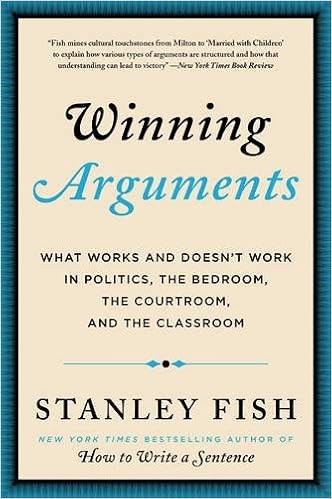
- We filter facts through our interpretive communities
- When the communities are ideologically different, the two sides argue and cannot agree
- The sides cannot agree on the facts

Save the World Through Teaching Writing: Patricia Bizzell
- “Opinion: Composition Studies Saves the World!” by Patricia Bizzell
- College English, Volume 72, Number 2, November 2009
- Bizzell argues that compositionists can save the world or at least make it a better place by:
- 1. Teaching Writing
- 2. Assigning “materials that raise issues of social justice and foster reflection on rhetorical methods of engaging them” (p. 165)
- 3. Giving students “contact with the professor’s personality and values” (p. 186)
- 1. Teaching Writing


Critical/Cultural Studies (CCS)
FULKERSON / COMPOSITION AT THE TURN OF THE CENTURY (pp. 660-661)
- “It’s important to emphasize that in CCS the course aim is not ‘improved writing’ but ‘liberation’ from dominant discourse. Here is how Ann George puts it: “[C]ritical pedagogy engages students in analyses of the unequal power relations that produce and are produced by cultural practices and institutions [. . .], and it aims to help students develop the tools that will enable them to challenge this inequality” (92). And here are some satiric but revealing thoughts of a new graduate teaching assistant, prior to entering her first-year CCS class- room: “[Students] will be astonished as I, layer by layer, unveil their ideology. They will gawk when I expose the simulacra. They will not be able to stop their pens when questioning their role in the university, the cultural formation of gender roles and expectations, racial stereotypes, and the ethical practices of the titans of industry” (Heimer 17). James Berlin, surely the most famous CCS advocate, defined the goal of the social composition course saying, “Our larger purpose is to encourage our students to resist and to negotiate [. . .] hege- monic discourses—in order to bring about more personally humane and so- cially equitable economic and political arrangements” (“Composition” 50).
- Certainly it’s misleading to talk of a single “cultural studies” or “critical” or “feminist” pedagogy. A tremendous variety of courses fit the CCS rubric. But here, as I understand it, are the essential features that would justify categoriz- ing a writing course, including feminist courses, under the CCS heading.
-
- The centralactivity of the course is interpretation.The interpretation may be of readings, either about cultural theory or the experiences of a cultural group or individual (Richard Rodriguez, Victor Villanueva, Paulo Freire, Gloria Anzaldúa, and other authors are popular). Alternatively, students may interpret cultural artifacts—ads, TV shows, minority language use, popular songs, etc. Most often, both sorts of “texts” are used.
- Frequently,multipletextsreflectonetheme:thecourseoramajor chunk of it might be about family, the Vietnam War, education, the sixties. (For real examples, see George and Trimbur’s anthology Reading Culture.)
- The interpretive moves assume the artifact/textr eveals certain deep structural truths about power in American society, specifically ways in which the dominant culture dominates, in terms of race, class, gender, sexual orientation, etc.
- Students write papers interpreting social artifacts, usually selected in connection with the course theme(s). Some courses involve a fairly elaborate enactment of writing as an extended, recursive, complex process.
- The course goal, as framed by Berlin and others, is to empower or liberate students by giving them new insights into the injustices of American and transnational capitalism, politics, and complicit mass media” (pp. 660-661).
Composition’s Current Focus: Critical/Cultural Studies (CCS)
- The field of Composition Studies focuses heavily on CCS for its current conferences and publications
- This reflect’s the heavy concern at universities for promoting Diversity, Equity, and Inclusion
- This also reflects the larger social need to address issues raised by the #metoo and Black Lives Matter movements
Save the World Through Teaching Writing: Deborah Williams
- Williams, Deborah. How First-Year Comp Can Save the World. Inside Higher Ed, 2 Jan. 2020, https://www.insidehighered.com/views/2020/01/02/benefits-applying-best-aspects-composition-classes-higher-education-general-opinion. Accessed 4 July 2020.
- Williams says we must teach “consilience”: “the ability to draw upon multiple intellectual disciplines to inform one’s perspective”
- “Does the world really need 20-something graduates who are hyperspecialized, who can only consider information and ideas within the framework of their own narrow paradigms? In the world of fake news and social media blizzards, wouldn’t we all be better served by graduates who can examine ideas from a variety of perspectives and work collaboratively with peers whose personal experiences might be very different from their own?Consilient critical thinkers can resist the quick and snarky comments that score likes on Twitter, and they understand that “critical thinking” doesn’t mean “criticize everything.” The well-taught composition class teaches students that good questions move thinking forward rather than shut it down And it shows them the importance of the pause: the space between the first draft and the second, between snark and support, between negation and connection. No handout can do that.”
Political Activism
- If you have the privilege to live in a democratic society, you should become informed and you should vote
- You should encourage your students to do the same
- You should also support students’ right to hold views distinct from yours
- You should also help students explore ways to engage in local issues
- You can also write politicians to make your voice heard; political strategists typically assume that one person’s letter is equivalent to 100 voters’ views
- You can also write to your local paper
Revisit Your Teaching Vision
- Video: Natasha Beddingfield “Unwritten”
- How should we teach composition?
An Anthem for a Better World
Examples