Overview of School Stories & Language Legends
School Stories Required Materials and Task
Articles/Chapters about Narrative Inquiry
- Wikipedia Entry: “Narrative Inquiry”
- Article: Clandinin, D. J., & Huber, J. (in press). Narrative inquiry. In B. McGaw, E. Baker, & P. P. Peterson (Eds.), International encyclopedia of education (3rd ed.). New York, NY: Elsevier.
- This article provides some basic definitions of Narrative Inquiry
- Book Chapter: Clandinin, D. Jean, and F. Michael Connelley. 2000. Narrative Inquiry. Experience and Story in Qualitative Research. San Francisco: Jossey-Bass Publishers.
- Please read Chapter 4 “What Do Narrative Inquirers Do?” (pp. 48-62)
- I have posted Chapter 4 of Narrative Inquiry on the D2L Class Website
Chapters about Narrative Ideology
- Pagnucci, G. S. (2004). Living the narrative life: Stories as a tool for meaning making. Portsmouth, NH: Heinemann Boynton/Cook.
Chapter about Framing School Stories
- Book Chapter: Meyer, Richard J. 1996. Stories from the Heart. Teachers and Students Researching Their Literacy Lives. Mahwah, NJ: Lawrence Erlbaum Associates.
- Please read Chapter 5 “Framing Our Stories” (pp. 119-132)
- I have posted Chapter 5 of Stories from the Heart on the D2L Class Website
Sample Narrative Inquiries
- Goodlad, K. , Cheng, S. , Sears, J. , Diaz, M. , Satyanarayana, A. , Kreniske, P. (2019). “Our Stories”: First-year Learning Communities Students Reflections on the Transition to College. Learning Communities Research and Practice, 7(2), Article 5. Available at: https://washingtoncenter.evergreen.edu/lcrpjournal/vol7/iss2/5
- Chan, E. Y. (2017). Narrative Inquiry: A Dynamic Relationship between Culture, Language and Education. Australian Journal of Teacher Education, 42(6). Retrieved from http://ro.ecu.edu.au/ajte/vol42/iss6/2.
- Genova, Holly, & Stewart, Mary Amanda. (2019). “My Life, My Stories”: Reading, Writing, and Belonging in the ESL Classroom. English Journal, 108(3), 34-43.
School Stories Class Activities
A Song about the Anti-Narrative Forces of Education
- Video: “The Logical Song” by Supertramp (1979)
- This song explores the educational bias toward logic and reason vs. narrative and emotion
- School tends to privilege left brain/logical thinking vs. right brain/emotional thinking
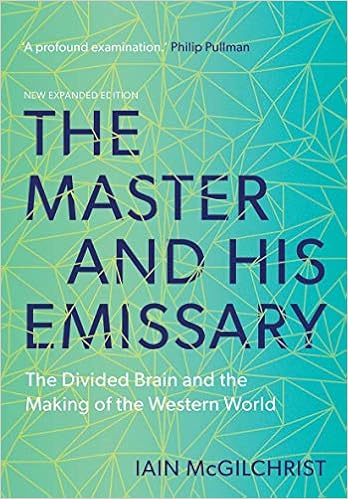
- Ian McGilchrist has discussed this issue in his book: The Master and HIs Emissary: The Divided Brain and the Making of the Western World
Freewriting: School as Site of Challenge
- School can be a fabulous place, but it can also be a very challenging place
- Freewrite about a memory of a challenge you can think of connected to school
- This could be a challenge you experienced
- It could be a challenge you observed another student experiencing
- It could be a challenging student you once worked with as a teacher or mentor
Discussion: School as Site of Challenge
- We will discuss some of these school memories
Reframe the School Story
- Who tells a story and how that story is told always shapes what the reader of the story hears
- Rewrite your story using a different point of view to show how an alternate narrator might offer a different explanation for what happened in your challenging school story
- Some possible narrators might be:
- The student’s parent(s), a close friend, a sibling, the teacher, a counselor, or, and this could really change things, someone who really dislikes that student
Discussion: How Re-Framing Works
- How does changing the narration change your story?
Small Group Work: Framing Rob’s Story
- Read Rob’s story:
- As a group, write a frame for this story to explain its meaning and importance
Discussion: Framing Rob’s Story
- We will talk about multiple ways to frame Rob’s story
- An ordinary story often has no frame
- Some stories, like fables, often included a moral at the end of the story to explain to readers the lesson the story was trying to teach
- In a narrative inquiry, a frame can offer a possible interpretation of a story
- If the story has more than one possible interpretation, we might offer more than one frame for it
- One of the critiques of teacher stories is that they can present the teacher as too heroic
- The story of Rob offers the real frustrations the teacher experiences
- We hear the teachers emotions and doubts in trying to help Rob
- The story does a nice job of using dialog, description of the teacher’s office, and presenting her positive experiences contrasted with her negative experiences
- She also says, “In a moment of which I am still ashamed,” which gives us her own interpretation of what happened
Three-Dimensional Narrative Inquiry Space
- One p. 50 of Chapter 4, Clandinin and Connelly provide a rich way of viewing any narrative experience
- They want us to think about experience in 3D
- They ask researchers to consider these elements:
- Interaction (personal vs. social)
- Continuity (past, present, and future)
- Situation (place)
- Clandinin and Connelly are also very interested in what it is like to be “in the midst” of an experience (something we could capture if we take reflective field notes) and they are very interested in “negotiating” meaning
- Narrative inquiry values fluidity over fixed interpretation/certainty
A 3D Discussion
- As a group, discuss how you might make your story of Rob more three-dimensional
- Then we will talk about that 3D framing as a full class
Living the Narrative Life
- That Pagnucci guy thinks he knows everything about narrative, but we’ve already talked about imposter syndrome (or maybe its just delusions of grandeur)
- One useful set of ideas, though, are the “Central Tenets of Narrative Ideology” that he outlines beginning on p. 48 of his book; here are those key narrative ideology beliefs:
- Meaning Comes Through Stories
- Resisting Closure
- The Centrality of Art
- The Fluidity of Truth
- The Pleasure of Messiness
- Retelling Academia
A Lively Discussion
- How might you draw on some of Pagnucci’s suggestions to help “bring your school story/language legend” to life?
A Song about Teachers to Help You Finish Your School Story/Language Legend with a Smile
- “The Teacher Appreciation Song”
- Although “The Logical Song” is a great tune and raises some important issues, it also is a little bit negative
- Therefore, to help you finish Chapter 9 – School Stories & Language Legends on a positive “note,” 🙂 I want you to make sure you watch this fabulous salute to teachers before you finish this chapter
Assignments
Due July 9 Wednesday: Required Readings on Family Story Telling
- Amy Tan: “Mother Tongue”
- Maxine Hong Kingston “The Misery of Silence” (this link will download the story for you to read)
- Chan, E. Y. (2017). Narrative Inquiry: A Dynamic Relationship between Culture, Language and Education. Australian Journal of Teacher Education, 42(6). Retrieved from http://ro.ecu.edu.au/ajte/vol42/iss6/2.
Optional Materials for Language Legends
- Genova, Holly, & Stewart, Mary Amanda. (2019). “My Life, My Stories”: Reading, Writing, and Belonging in the ESL Classroom. English Journal, 108(3), 34-43.
- Sahnoun, Yassir. “3 Amazing Stories of Language Learners Who Changed the World”
- TEDx Talk: Canwen Xu “I Am Not Your Asian Stereotype”
- TEDx Talk: Louka Parry “Words Can Change the World: How Language Learning Deepens Connection”
- Trin Min Han: From Silence to Words