How to Tell a Good Research Story
Video: “Angela” by the Lumineers (5:25)
Narrative Writing Activity (10 minutes)
Write about a moment of transition that you remember
-
- starting college
- starting school
- moving
- starting a new job
OR
Write about a good teacher you remember
-
- describe an interaction you had with the teacher
- describe how the person talked
- describe how the person looked
- describe how their classroom or office
- capture some of their voice
For either scenario, try to capture at least a little of this story.
Some Story Questions (10 minutes)
- What could you remember?
- What did you have to make up?
- How could you create dramatic tension in the story?
- What sort of moral/life lesson might be drawn from the story?
What to Write About?
A good story needs some dramatic tension. While anything can become a story, these are the types of moments to look for. Moments of..
- Change/transition
- Discovery
- Conflict
- Potentiality/Decision
- Character
To bring the story to life, you will want:
- thick description
- dialogue
- a little mystery
- a little art
It’s also good to know that it doesn’t all have to make sense. So often life doesn’t make sense, but we have to go on on anyway.
Milan Kundera calls that, “the wisdom of uncertainty.”
Narrative Inquiry (10 minutes)
Jean Clandinin and Michael Connely: Narrative Inquiry
- Narrative inquiry does not ask research questions, which imply definitive answers
- Narrative inquiry explores research puzzles
- Narrative inquiry describes three dimensional story space

- David Schaafsma and Ruth Vinz: On Narrative Inquiry
- Additional examples for how to conduct narrative inquiry
- Joseph Trimmer: Narration as Knowledge
- Classroom stories
- CompTales
- Stories of writing teachers
Key Narrative Concepts (20 minutes)
The Author As Narrator: Embracing Subjectivity
- It’s important to show that a real person wrote the story
- Real people have doubts
- They are not always certain
- They consider possibilities
- Good narratives capture these tensions
Multiple Voices
- Good stories need multiple voices
- We want real people to speak
- Not Teacher A, but Brenda Mitchell or Jose Allejandro
- Embrace the reality of the people and describe them so you bring them to live
- Then capture the essence of how they talk so we can get their voices
The Importance of Art and Creativity
- Pagnucci: Living the Narrative Life
- The words and how the story is told should impact us
- Care should be taken to craft the story so it has emotional resonance
- A good narrative is more than a study, it is a living, breathing work of art
- We should feel we get to know the people in the story
Lived Experience
- In life there is what happens and what seems to happen
- Both are important
- Tim O’Brien: “How to Tell a True War Story” in The Things They Carried
- O’Brien turned at the sound of a detonator and watched Lemon step from out of the shade into the sunlight and explode. Lemon’s death was almost beautiful with the sunlight all around him, and how it looked like it had sucked him up into the tree above.
- In a true war story, it’s difficult to distinguish between what happened and what seemed to happen. “What seems to happen becomes its own happening and has to be told that way.” Everyone’s vision and their angle of it are different. The memories get confused. After, when you try to tell the story, there is always “that surreal seemingness,” which makes the story sound like a lie, “but which in fact represents the hard and exact truth as it seemed.
The Elusiveness of Memory
- Stories are for joining the past to the future. Stories are for those late hours in the night when you can’t remember how you got from where you were to where you are. Stories are for eternity, when memory is erased, when there is nothing to remember except the story. Tim O’Brien in The Things They Carried
The Nature of Truth
- In his book Living the Narrative Life: Stories as a Tool for Meaning Making, Gian Pagnucci writes, “I think, actually, that stories can help us get at the truth even if there isn’t a firm truth to be had.” (51)
- Tim O’Brien: “How to Tell a True War Story” in The Things They Carried
- A thing may happen and be a total lie; another thing may not happen and be truer than the truth. A true war story is never moral. It does not instruct, nor encourage virtue, nor suggest models of proper human behavior, nor restrain men from doing the things men have always done.
Resist Finality
- Good stories explore possibilities
- They don’t try to be definitive
- They leave paths of interpretation open to the reader
The End of the Story
- It’s not about finding the perfect job or the perfect partner. It’s about YOU making the job or partner you choose be the right one. That’s how you find what you were looking for. You make it.–Jeff Wiemelt
- Stories give us a chance to explore what is, what was, and what might have been. And then use that to change life for the better by rewriting the world to try to make it into what we want it to be.
- “Traveler’s Tales” from Living the Narrative Life: Stories as a Tool for Meaning Making (Pagnucci, 2004)
- Imagine if we just all kept telling good stories together…and then lived that way too.
A Brief History of Narrative Theory
Clifford Gertz and Thick Description
- Clifford Gertz (1926-2006)
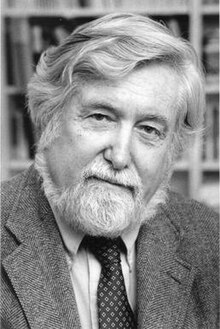
- Geertz, Clifford (1973). “Thick Description: Toward an Interpretive Theory of Culture,” The Interpretation of Cultures: Selected Essays. New York: Basic Books, pp. 3-30.
- “Geertz’s methods were in response to his critique of existing anthropological methods that searched for universal truths and theories. He was against comprehensive theories of human behavior; rather, he advocated methodologies that highlight culture from the perspective of how people looked at and experienced life. “
- Gertz’s work expanded ethnographic writing from the vignette, a 1 or 2 page story describing people, to a detailed write-up describing a culture
- Gertz introduced the notion of “thick description“
- Gertz’s work also issued in the Interpretive Turn
- “Interpretive methodologies were needed to understand culture as a system of meaning. Because of this, Geertz’s influence is connected with a massive cultural shift” in the social sciences referred to as the interpretive turn. The interpretive turn in the social sciences had strong foundations in cultural anthropological methodology. In doing so, there was a shift from structural approaches as an interpretive lens, towards meaning. With the interpretive turn, contextual and textual information took the lead in understanding reality, language, and culture. This was all under the assumption that a better anthropology included understanding the particular behaviors of the communities being studied.”
Shirley Brice Heath’s Ways with Words
- Shirley Brice Heath
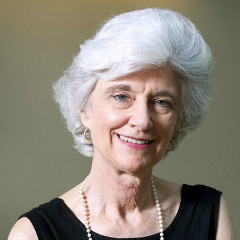
- Heath was an anthropologist
- She spent 11 years studying 2 communities in the south
- This gave her insight into how language learning occurs
- Heath, S. B. (1983). Ways with Words: Language, Life, and Work in Communities and Classrooms. Cambridge: Cambridge University Press.

- Ways with Words, first published in 1983, is a classic study of children learning to use language at home and at school in two communities only a few miles apart in the south-eastern United States. ‘Roadville’ is a white working-class community of families steeped for generations in the life of textile mills; ‘Trackton’ is an African-American working-class community whose older generations grew up farming the land, but whose existent members work in the mills. In tracing the children’s language development the author shows the deep cultural differences between the two communities, whose ways with words differ as strikingly from each other as either does from the pattern of the townspeople, the ‘mainstream’ blacks and whites who hold power in the schools and workplaces of the region. Employing the combined skills of ethnographer, social historian, and teacher, the author raises fundamental questions about the nature of language development, the effects of literacy on oral language habits, and the sources of communication problems in schools and workplaces.
- Heath’s work brought observation and thick description to the field of Composition Studies
Jerome Bruner and the Narrator Self
- Jerome Bruner (1915-2016)
- Bruner helped develop the idea of self as narrator/storyteller
- Bruner advocated for reconsidering the epistemological and methodological foundations of psychology and other social sciences
- Bruner published two seminal works on narrative
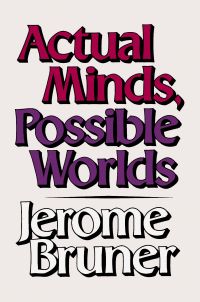
- Jerome Bruner: Actual Minds, Possible Worlds

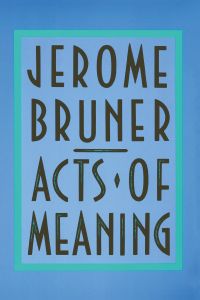
- Jerome Bruner: Acts of Meaning (1993)
Mikhail Bakhtin and Discourse in the Novel
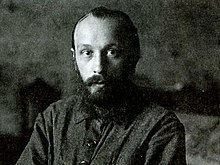
- Mikhail Bakhtin (1895-1975)
- Bakhtin, M. M. (1981). The Dialogic Imagination: Four Essays (Edited by Michael Holquist, and Translated Caryl Emerson and Michael Holquist). University of Texas Press.
- Bakhtin uses discussion of the novel to show how language is socially constructed
- “The word in language is half someone else’s. It becomes ‘one’s own’ only when the speaker populates it with his own intention, his own accent, when he appropriates the word, adapting it to his own semantic and expressive intention. Prior to this moment of appropriation, the word does not exist in a neutral and impersonal language (it is not, after all, out of a dictionary that the speaker gets his words!), but rather it exists in other people’s mouths, in other people’s contexts, serving other people’s intentions” (Dialogic Imagination 293).
- For Bakhtin, all language is social, requiring dialog, what Bakhtin calls “dialogism”
- Bakhtin used the term “heteroglossia” to explain how meaning is contextual and socio-historical
- Heteroglossia is a way of understanding meaning as being like a swirling river, with intention, history, gender, race, and class all mixing into the meaning of any utterance
- This diversity of voice is, Bakhtin asserts, the defining characteristic of the novel as a genre. When heteroglossia is incorporated into the novel, it is “another’s speech in another’s language, serving to express authorial intentions but in a refracted way.”
- I read his use of the word “novel” to mean “narrative”
- Bakhtin helps us to think about the importance of voice for imbuing narratives with multiple meanings and perspectives
- Adding voices, dialogue, to a story helps make the story a rich heteroglossia for the reader
- Voices can also be introduced through artifacts, like including quotes, letters, notes, or other secondary text in the story–these artifacts bring multiple voices into the story